Great leadership isn’t about applying a one-size-fits-all approach—it’s about understanding people and adapting your style to bring out their best. Many managers struggle with communication gaps, low engagement, or team conflicts simply because they don’t fully understand what drives each team member. One powerful way to bridge this gap is by using a disc personality assessment, which provides practical insights into individual behavior and motivation. When used correctly, DISC becomes more than a personality tool it becomes a leadership advantage.
Understanding DISC in a Practical Way
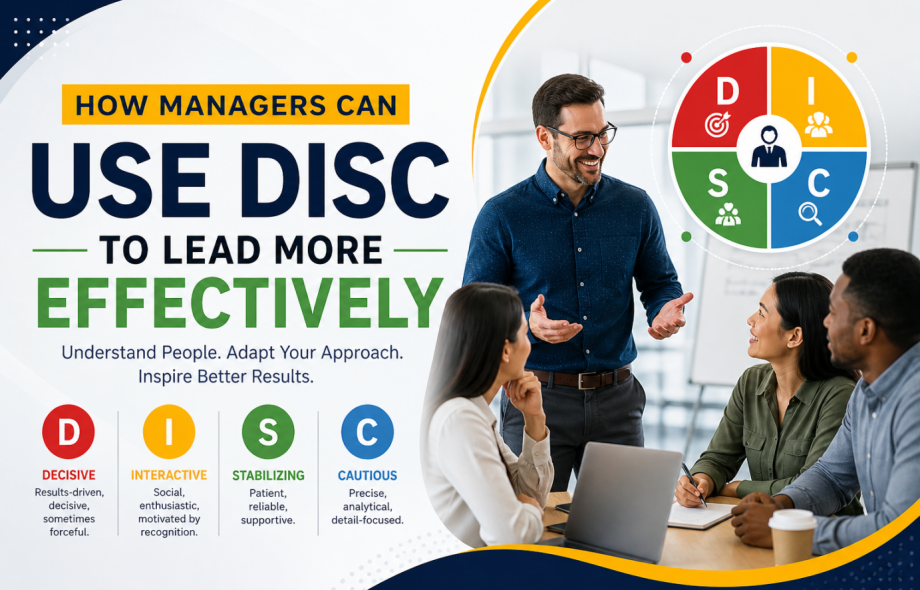
Before applying DISC in leadership, it’s important to understand what each type represents in your framework:
- D – Decisive: Results-driven, decisive, sometimes forceful
- I – Interactive: Social, enthusiastic, motivated by recognition
- S – Stabilizing: Patient, reliable, supportive
- C – Cautious: Precise, analytical, detail-focused
Every team is a mix of these personalities, and most individuals show a blend of traits. Effective managers don’t label people—they use DISC to better understand how to communicate, motivate, and lead.
Why DISC Matters for Managers
Managers often assume that what motivates them will motivate their team. That’s rarely true. DISC helps managers:
- Recognize different communication styles
- Reduce misunderstandings and conflict
- Improve delegation and productivity
- Build stronger, more cohesive teams
Instead of guessing how to lead, DISC gives you a clear roadmap.
1. Adapt Your Communication Style
One of the fastest ways to become a better leader is to adjust how you communicate based on personality type.
- With D (Decisive): Be direct, brief, and results-focused. Avoid too much detail—get straight to the point.
- With I (Interactive): Be enthusiastic and engaging. Allow space for conversation and recognition.
- With S (Stabilizing): Be calm, patient, and supportive. Avoid rushing them or pushing sudden changes.
- With C (Cautious): Be clear, logical, and detailed. Provide data and allow time for analysis.
Managers who tailor communication this way see immediate improvements in clarity and trust.
2. Delegate Tasks More Effectively
Delegation isn’t just about assigning work—it’s about assigning the right work to the right person.
- D types thrive on challenges, leadership roles, and goal-oriented tasks
- I types excel in collaborative, people-facing, or creative work
- S types are strong in supportive roles, consistency, and teamwork
- C typesshine in detail-heavy, analytical, and quality-focused tasks
When managers align tasks with natural strengths, productivity increases and frustration decreases.
3. Motivate Each Personality Differently
Motivation is not universal. What inspires one employee might disengage another.
- D (Decisive): Motivated by results, competition, and achievement
- I (Interactive): Motivated by recognition, praise, and social interaction
- S (Stabilizing): Motivated by stability, appreciation, and teamwork
- C (Cautious): Motivated by accuracy, quality, and expertise
A manager who understands this can create a more energized and committed team without increasing workload or pressure.
4. Improve Team Collaboration
Many workplace conflicts come from misunderstandings rather than actual disagreements. DISC helps managers identify why friction occurs.
For example:
- A D type may seem too aggressive to an S type
- A C type may appear overly critical to an I type
- An I type may feel restricted by a C type’s need for structure
By explaining these differences openly, managers can turn conflict into collaboration. Teams begin to appreciate different perspectives rather than resist them.
5. Strengthen Leadership Flexibility
Great leaders are flexible. DISC gives managers a framework to shift their leadership style depending on the situation.
For instance:
- Use a directive approach when leading D personalities
- Use an inspiring approach for I personalities
- Use a supportive approach for S personalities
- Use a structured approach for C personalities
This adaptability makes leadership more effective and reduces resistance from team members.
6. Enhance Feedback and Performance Reviews
Giving feedback is one of the hardest parts of management—but DISC makes it easier.
- D types: Prefer direct, results-oriented feedback
- I type: Respond well to positive reinforcement with constructive suggestions
- S types: Need gentle, supportive feedback to avoid discouragement
- C types: Appreciate detailed, fact-based feedback
When feedback matches personality style, it’s more likely to be accepted and acted upon.
7. Build Stronger Relationships with Your Team
Leadership is built on trust, and trust comes from understanding. DISC allows managers to connect with employees on a deeper level.
Instead of seeing behaviors as “difficult,” managers start to see them as predictable and manageable. This shift changes how leaders respond:
- Less frustration
- More empathy
- Better problem-solving
Over time, this leads to stronger relationships and higher retention.
8. Use DISC for Conflict Resolution
Conflict is inevitable—but it doesn’t have to be destructive.
DISC helps managers:
- Identify the root cause of conflict
- Understand each person’s perspective
- Mediate in a way that respects both sides
For example:
- A conflict between a D and S type may require balancing speed with patience
- A conflict between I and C types may need a mix of creativity and structure
Managers who use DISC in conflict resolution create a more positive work environment.
9. Develop Future Leaders
DISC is not just for managing—it’s also for developing talent.
Managers can use DISC to:
- Identify leadership potential
- Coach employees based on strengths and weaknesses
- Prepare team members for future roles
For example:
- A D type may need coaching on empathy
- An I type may need help with focus and follow-through
- An S type may need encouragement to take initiative
- A C type may need support in decision-making speed
This targeted development approach builds stronger leaders over time.
10. Create a Balanced Team Culture
The most successful teams are not made up of one personality type—they are balanced.
- D brings drive and results
- I bring energy and enthusiasm
- S brings stability and support
- C brings accuracy and quality
Managers who recognize and value each type create a culture where everyone contributes meaningfully.
Common Mistakes Managers Should Avoid
While DISC is powerful, misuse can limit its effectiveness. Avoid these common mistakes:
- Labeling employees: DISC is a guide, not a box
- Ignoring flexibility: People can adapt beyond their primary type
- Using it once and forgetting it: DISC works best when applied consistently
- Overgeneralizing behavior: Always consider context
The goal is understanding—not categorizing.
Final Thoughts
Leadership today requires more than authority—it requires awareness, adaptability, and emotional intelligence. DISC provides a simple yet powerful framework to understand what drives your team and how to lead them effectively.
When managers apply DISC in daily interactions—communication, delegation, motivation, and conflict resolution—they don’t just manage better, they lead better. Over time, this creates stronger teams, higher performance, and a more positive workplace culture.
The real power of DISC lies not in the assessment itself, but in how managers use it to bring out the best in every individual.
 :
https://in.pinterest.com/olivedsmith/
:
https://in.pinterest.com/olivedsmith/