The smartwatch market has grown huge from the last decade. It is expected to reach USD 105.20 billion by the year 2032. Currently, the smart watch industry’s value is swinging between USD 38 to 41 billion. The USA is the biggest contributor in this significant growth. The United States alone is expected to reach USD 20.87 billion by 2032. This wearable technological market is ruled by Apple. Samsung and Huawei are little far behind from the profits that Apple is making. But they are more or less offering the same high-performance smart watches.
Smartwatches look simple from the outside. They have a sleek screen, clean strap and a few sensors doing their job quietly in the background. But behind that small device is a longlist of decisions that directly affect whether a brand makes money or barely breaks even. Customers’ expectations are growing more and more with every passing year. They expect to have more improved battery timing along with effortless performance, good health tracking and above all new unique designs.
Now the biggest challenge here is how to balance smartwatch features and profit margins? This question sits at the center of modern smartwatch business profitability. And this blog will help you find the right smartwatch profit strategy.

Smartwatch profit strategy showing balance between features and manufacturing cost
The Constant Tug of War Between Cost and Features
At first glance, adding a feature sounds easy. Whether adding a sensor, upgrading the display or improving the processor. Everything seems very simple. But in reality, every upgrade raises manufacturing costs, testing time and long-term support expenses. This is where smartwatch cost vs features becomes a serious business decision. Brand have to ask:
- Will customers notice this feature?
- Will it influence the buying decision?
- Or will it only look good on a spec sheet?
Features that don’t clearly improve the user experience often get cut from the end product design. Not because they are not impressive but because they don’t justify the cost.
Why Not Every Smartwatch Needs Every Feature
One mistake new brands make is trying to impress everyone at once. Established brands don’t do that. Instead, they design watches for specific users:
- Fitness-focused buyers care about sensors and accuracy.
- Everyday users care about battery life and simplicity.
- Premium buyers expect materials, design and brand value.
By limiting features based on audience, brands can better balance smartwatch features and profit margins without overbuilding products that will not sell.
Smartwatch Pricing Strategy is rarely about one price
Most successful brands don’t rely on a single model. They use a layered smartwatch pricing strategy. This is one of the most effective ways brands balance smartwatch features and profit margins is through tiered pricing. Most companies offer:
- A basic model with essential features to attract new users.
- A mid-range option with the most popular features.
- A premium version that carries higher margins with cutting-edge technology and materials
Once the watch is sold,software becomes a long-term revenue stream. This smartwatch pricing strategy allows brands to keep device prices competitive while still growing overall profitability. This smartwatch pricing strategy allows brands to:
- Capture a wider audience.
- Encourage upgrades without forcing them.
- Protect margins on premium models.
Rather than one “perfect” watch, brands create multiple profit-optimized options.
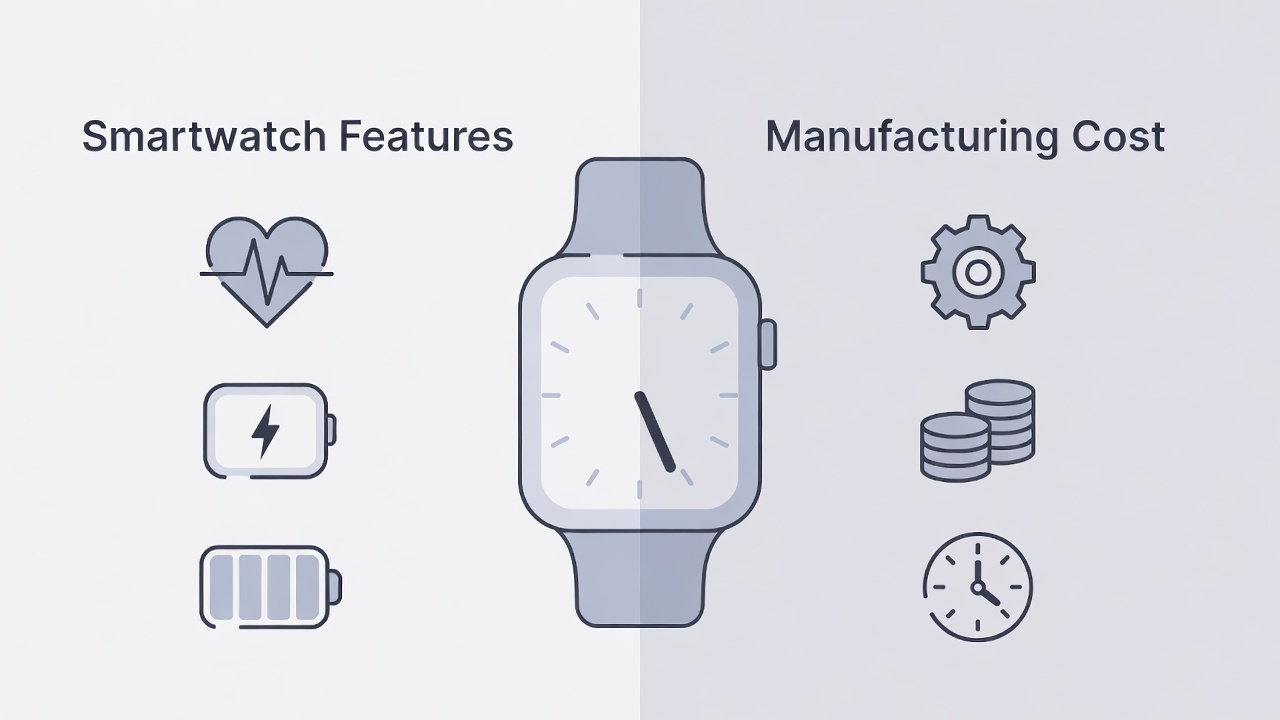
Smartwatch cost vs features comparison showing manufacturing and design tradeoffs
Where Smartwatch Profit Strategy Really Comes From
Hardware alone does not always deliver strong margins. But software opens new revenue streams.That’s why modern smartwatch profit strategy often goes beyond the device itself. Many brands now rely on:
- Paid fitness subscriptions.
- Advanced health insights.
- Exclusive software features.
- Cloud storage for activity data.
- Exclusive watch faces and app integrations.
Once the watch is sold, software becomes a long-term revenue stream. This allows brands to keep device prices competitive while still growing overall profitability.
Small Design Choices That Protect Big Margins
Design decisions play a much bigger role than people realize. Switching materials, simplifying shapes or reducing component variety can lower production costs significantly. Even packaging matters like premium presentation increases perceived value without drastically raising costs. This is why brands invest in clean, durable packaging like custom rigid packaging boxes. They protect the product, improve the unboxing experience and reinforce a premium image. All without touching the internal hardware budget.
Scaling Changes Everything
As smartwatch brands grow, costs change. Ordering components in bulk, reusing internal parts across multiple models and negotiating long-term supplier contracts all improve margins. Larger brands often reuse the same internal architecture across generations, updating only what truly matters. This reduces R&D costs while keeping products fresh. That’s one of the quiet drivers of smartwatch business profitability most consumers never see.
Marketing Is Not About Features, Its About Marketing
Something many brands learn the hard way: customers don’t buy features, they buy outcomes. Instead of saying: “Now with improved heart rate monitoring”. But successful brands say: “Helps you understand your daily health patterns better”. This shift in messaging allows brands to justify pricing without adding unnecessary features. A smart move when protecting margins.
Innovation Without Burning Money
The smartwatch industry is facing a cut throat competition and innovation is the main player here. But innovation comes with hefty prices which can really sabotage profitability. Smart watches brands like Apple, Samsung or Huawei survive just by:
- Improve features gradually.
- Focus on software upgrades.
- Avoid full redesigns unless necessary.
The Future of Wearable Value: Sustaining Innovation and Profit
In a nutshell, the sleek shape and shining straps may seem glamorous. But it is quite the opposite when a smartwatch manufacturer balances smartwatch features and profit margins. It’s not easy to balance updated features with profitability. This is what distinguishes most popular and sold smartwatch brands from failed experiments. When brands manage smartwatch cost vs features, refining pricing strategies and deriving the successful long-term revenue models. Profitability should never be treated as a short-term goal. They actually grow without sacrificing margins.
 :
https://www.pinterest.com/silveredgepackaging/
:
https://www.pinterest.com/silveredgepackaging/