Introduction
The Whey Protein Market has become a cornerstone of the global nutritional supplements and sports nutrition industries, propelled by rising consumer focus on health, wellness, and fitness. Whey protein—derived from milk during the cheese-making process—is valued for its high biological value, essential amino acid profile, and rapid digestibility. These attributes make it a preferred choice among athletes, fitness enthusiasts, and health-conscious consumers seeking muscle support, weight management, and overall well-being. As lifestyle diseases increase and preventive health becomes a priority, whey protein remains a key ingredient across dietary supplements, functional foods, beverages, and specialized nutrition products.
Market Size and Growth Projections
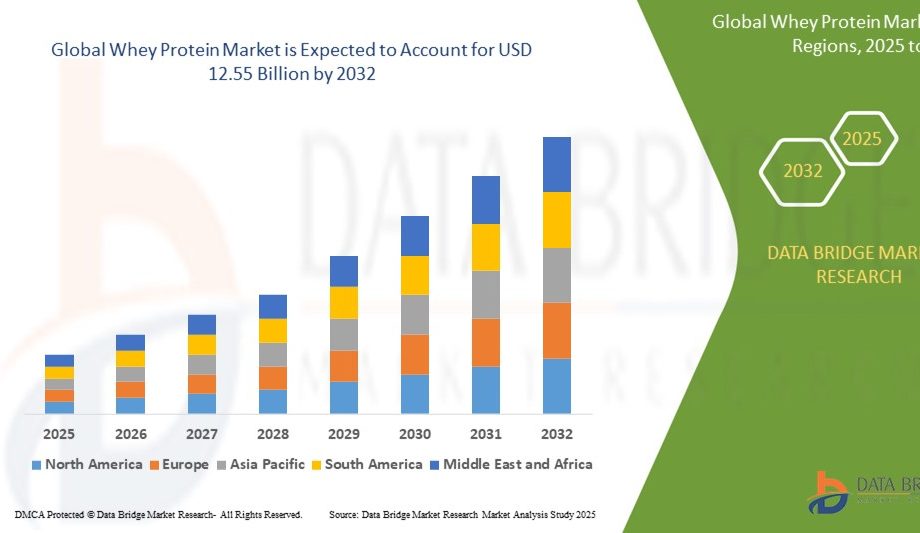
The whey protein market is experiencing strong expansion, supported by robust demand in sports nutrition, dietary supplementation, and functional food segments. The market is projected to grow at a healthy compound annual growth rate (CAGR) over the forecast period, driven by increasing global fitness adoption, rising disposable incomes, and heightened awareness of protein-rich diets. Emerging applications in clinical nutrition, weight-management products, and premium food formulations are further enhancing market valuation.
Get More Details : https://www.databridgemarketresearch.com/reports/global-whey-protein-market
Key Growth Factors
- Rising demand for high-quality protein supplements in sports and fitness
- Growing consumer awareness of health and preventive nutrition
- Expansion of nutraceutical and functional food sectors
- Development of plant-based and hybrid protein blends
- Increasing penetration of online retail and direct-to-consumer channels
Market Segmentation
By Type / Service / Product
The market is segmented into whey protein concentrate, whey protein isolate, whey protein hydrolysate, and other specialty forms. Whey protein isolate holds a significant share due to its higher protein content and lower levels of fat and lactose, making it ideal for performance-oriented consumers and those with digestive sensitivities.
By Application
Based on application, the whey protein market includes sports nutrition supplements, dietary supplements, functional food and beverages, clinical and medical nutrition, and others. Sports nutrition remains the dominant application segment as athletes and active individuals favor whey protein for muscle recovery and performance enhancement.
By End User
End users consist of athletes and fitness enthusiasts, health-conscious consumers, aging population, medical patients, and others. Athletes and fitness enthusiasts represent the largest user group, driven by performance goals and regimen-based protein intake.
Regional Insights
North America commands a major share of the whey protein market, supported by strong consumer health awareness, well-established sports nutrition culture, and extensive product availability. Europe follows with steady growth, propelled by increasing fitness participation and expanding nutraceutical sectors. The Asia-Pacific region is a rapidly growing market due to rising disposable incomes, accelerating urbanization, and growing interest in health and wellness. Latin America and Middle East & Africa show moderate growth as awareness and distribution channels expand.
Key Market Drivers
The primary drivers of the whey protein market include heightened emphasis on health, fitness, and protein-enriched diets. Growing prevalence of lifestyle-related conditions—such as obesity and sarcopenia among aging populations—further strengthens demand for whey protein as part of preventive nutrition strategies. Additionally, broader retail accessibility and promotional activities by key brands enhance consumer adoption globally.
Market Challenges and Restraints
Despite strong growth, the market faces challenges such as price sensitivity, lactose intolerance concerns, and intense competition from plant-based protein alternatives. Regulatory complexities related to labeling and health claims can also impact product innovation and market entry. Price fluctuations in dairy commodity markets may further affect cost structures and profitability for manufacturers.
Competitive Landscape with Key Companies
- Glanbia plc (Optimum Nutrition)
- Arla Foods amba
- Fonterra Co-operative Group Limited
- Danone S.A.
- Nestlé S.A.
- Abbott Laboratories
- MusclePharm Corporation
- Ascent Protein LLC
These companies emphasize product innovation, premium formulations, brand positioning in sports nutrition, and expanded distribution channels to strengthen market share and consumer engagement.
Technological Innovations
Technological advancements in the whey protein market include improved fractionation and filtration technologies that enhance protein purity and yield. Innovations in taste masking, microencapsulation, and novel flavor systems improve consumer sensory experiences. Digital platforms and AI-driven consumer insights are enabling personalized nutrition formulations, while e-commerce analytics optimize product recommendations and supply chain efficiency.
SWOT Analysis
| High nutritional value and digestibility | Competition from plant-based proteins |
| Strong adoption in sports nutrition | Lactose intolerance limitations |
| Broad application across nutrition segments | Pricing volatility in dairy markets |
| Growth in clinical and medical nutrition | Regulatory uncertainties |
| Expansion in emerging markets | Shifts toward plant-centric diets |
| Development of hybrid protein blends | Supply chain and raw material risks |
Future Market Outlook
The future outlook for the whey protein market remains promising as consumer preferences for health-centric nutrition persist. Continued innovation in formulations, flavor profiles, and delivery formats is expected to broaden appeal across demographics. Expansion of digital health platforms, personalized nutrition, and hybrid protein solutions will further drive adoption. Manufacturers investing in sustainability and ethical sourcing practices are likely to enhance brand trust and long-term market growth.
Conclusion
The Whey Protein Market is firmly positioned as a key growth segment within the global nutrition and supplements landscape. Driven by performance needs, preventive health trends, and expanding product applications, whey protein continues to attract diverse consumer cohorts. With technological innovation, strategic branding, and broader global distribution, the market is poised for continued expansion amidst evolving dietary and lifestyle priorities worldwide.
Introduction
The Whey Protein Market has become a cornerstone of the global nutritional supplements and sports nutrition industries, propelled by rising consumer focus on health, wellness, and fitness. Whey protein—derived from milk during the cheese-making process—is valued for its high biological value, essential amino acid profile, and rapid digestibility. These attributes make it a preferred choice among athletes, fitness enthusiasts, and health-conscious consumers seeking muscle support, weight management, and overall well-being. As lifestyle diseases increase and preventive health becomes a priority, whey protein remains a key ingredient across dietary supplements, functional foods, beverages, and specialized nutrition products.
Market Size and Growth Projections
The whey protein market is experiencing strong expansion, supported by robust demand in sports nutrition, dietary supplementation, and functional food segments. The market is projected to grow at a healthy compound annual growth rate (CAGR) over the forecast period, driven by increasing global fitness adoption, rising disposable incomes, and heightened awareness of protein-rich diets. Emerging applications in clinical nutrition, weight-management products, and premium food formulations are further enhancing market valuation.
Get More Details : https://www.databridgemarketresearch.com/reports/global-whey-protein-market
Key Growth Factors
- Rising demand for high-quality protein supplements in sports and fitness
- Growing consumer awareness of health and preventive nutrition
- Expansion of nutraceutical and functional food sectors
- Development of plant-based and hybrid protein blends
- Increasing penetration of online retail and direct-to-consumer channels
Market Segmentation
By Type / Service / Product
The market is segmented into whey protein concentrate, whey protein isolate, whey protein hydrolysate, and other specialty forms. Whey protein isolate holds a significant share due to its higher protein content and lower levels of fat and lactose, making it ideal for performance-oriented consumers and those with digestive sensitivities.
By Application
Based on application, the whey protein market includes sports nutrition supplements, dietary supplements, functional food and beverages, clinical and medical nutrition, and others. Sports nutrition remains the dominant application segment as athletes and active individuals favor whey protein for muscle recovery and performance enhancement.
By End User
End users consist of athletes and fitness enthusiasts, health-conscious consumers, aging population, medical patients, and others. Athletes and fitness enthusiasts represent the largest user group, driven by performance goals and regimen-based protein intake.
Regional Insights
North America commands a major share of the whey protein market, supported by strong consumer health awareness, well-established sports nutrition culture, and extensive product availability. Europe follows with steady growth, propelled by increasing fitness participation and expanding nutraceutical sectors. The Asia-Pacific region is a rapidly growing market due to rising disposable incomes, accelerating urbanization, and growing interest in health and wellness. Latin America and Middle East & Africa show moderate growth as awareness and distribution channels expand.
Key Market Drivers
The primary drivers of the whey protein market include heightened emphasis on health, fitness, and protein-enriched diets. Growing prevalence of lifestyle-related conditions—such as obesity and sarcopenia among aging populations—further strengthens demand for whey protein as part of preventive nutrition strategies. Additionally, broader retail accessibility and promotional activities by key brands enhance consumer adoption globally.
Market Challenges and Restraints
Despite strong growth, the market faces challenges such as price sensitivity, lactose intolerance concerns, and intense competition from plant-based protein alternatives. Regulatory complexities related to labeling and health claims can also impact product innovation and market entry. Price fluctuations in dairy commodity markets may further affect cost structures and profitability for manufacturers.
Competitive Landscape with Key Companies
- Glanbia plc (Optimum Nutrition)
- Arla Foods amba
- Fonterra Co-operative Group Limited
- Danone S.A.
- Nestlé S.A.
- Abbott Laboratories
- MusclePharm Corporation
- Ascent Protein LLC
These companies emphasize product innovation, premium formulations, brand positioning in sports nutrition, and expanded distribution channels to strengthen market share and consumer engagement.
Technological Innovations
Technological advancements in the whey protein market include improved fractionation and filtration technologies that enhance protein purity and yield. Innovations in taste masking, microencapsulation, and novel flavor systems improve consumer sensory experiences. Digital platforms and AI-driven consumer insights are enabling personalized nutrition formulations, while e-commerce analytics optimize product recommendations and supply chain efficiency.
SWOT Analysis
| High nutritional value and digestibility | Competition from plant-based proteins |
| Strong adoption in sports nutrition | Lactose intolerance limitations |
| Broad application across nutrition segments | Pricing volatility in dairy markets |
| Growth in clinical and medical nutrition | Regulatory uncertainties |
| Expansion in emerging markets | Shifts toward plant-centric diets |
| Development of hybrid protein blends | Supply chain and raw material risks |
Future Market Outlook
The future outlook for the whey protein market remains promising as consumer preferences for health-centric nutrition persist. Continued innovation in formulations, flavor profiles, and delivery formats is expected to broaden appeal across demographics. Expansion of digital health platforms, personalized nutrition, and hybrid protein solutions will further drive adoption. Manufacturers investing in sustainability and ethical sourcing practices are likely to enhance brand trust and long-term market growth.
Conclusion
The Whey Protein Market is firmly positioned as a key growth segment within the global nutrition and supplements landscape. Driven by performance needs, preventive health trends, and expanding product applications, whey protein continues to attract diverse consumer cohorts. With technological innovation, strategic branding, and broader global distribution, the market is poised for continued expansion amidst evolving dietary and lifestyle priorities worldwide.
 :
: